
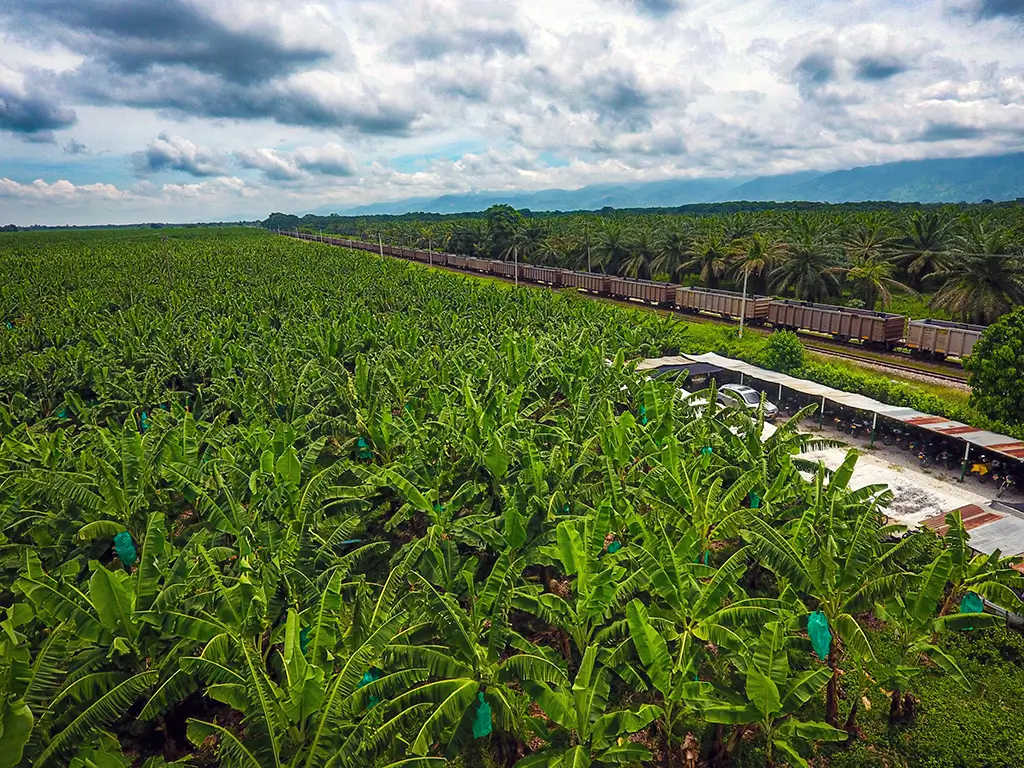
Magdalena, Colombia – January 20, 2025. Ensuring the sustainability and productivity of the business through actions that contribute to environmental care is the central objective of C.I. Banasan, which closed 2024 with positive results and ambitious projections for 2025.
The company reported a 3.5% growth in banana exports compared to 2023. According to its CEO, Carlos Pinilla, the goals for the new campaign are even more challenging:
“We expect 15% growth to finish the year exporting around 14 million boxes of bananas, in addition to plantain shipments to Europe, a business we restarted in the last quarter of 2024. We estimate exporting between five and six containers per week,” he stated.
Seven Pillars for Productivity
To achieve its goals, Banasan operates under a model based on seven key pillars:
Containment of Fusarium Tropical Race 4.
Intensification and standardization of good agricultural practices in cutting, harvesting, and packing.
Precision agriculture with intensive use of soil information.
Management of populations and control of Black Sigatoka.
Water management in plantations.
Training of operational and administrative workforce.
Mitigation of fruit losses due to ripening spots.
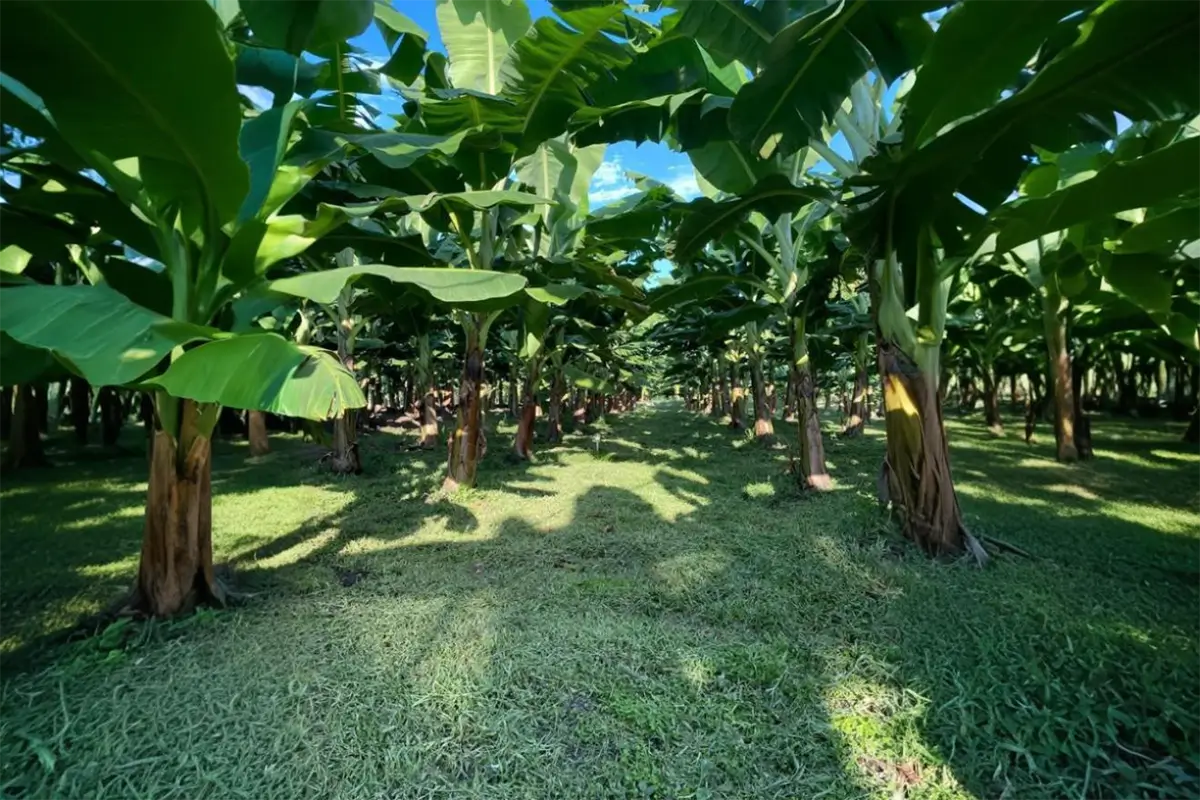
Pinilla highlighted that, although significant progress has been made in research, challenges remain regarding ripening spots, a defect that limits fruit exports. “There is still much to learn about how to mitigate the impact. Sometimes the practices work, sometimes they don’t, which creates uncertainty,” he explained.
Innovation and Precision Agriculture
One of Banasan’s differentiators has been precision agriculture. The company has detailed information on soil texture, structure, and strength, allowing it to design specific management, nutrition, irrigation, and drainage programs for each farm. This has increased productivity by adapting practices to the unique conditions of each plot.
Climate Change and Sustainability
The CEO emphasized that the sector faces the challenge of adapting good agricultural practices to climate change, which requires thinking in terms of smarter and more sustainable production models.
“We must adapt to ensure sustainable development. Today we know that to be more productive, we must operate under two premises: climate change and sustainability,” he stated.
Aligned with this vision, Banasan implements an integrated pest and disease management system that avoids the use of harsh chemicals, relying on practices such as pruning diseased leaves, nutritional management, and optimization of irrigation and drainage.

Technological Expansion with Drones
Currently, the company is already using drone fumigation on nearly 1,000 hectares, equivalent to 15% of its farms. The goal for 2025 is to cover 30% of the cultivated area, reducing dependence on traditional aerial spraying.
New Markets: South Korea and the U.S.
While Europe and the United Kingdom remain the main destinations, Banasan is looking toward South Korea and the United States. The challenge for Korea is to improve current maritime routes, which take between 30 and 40 days. “We are exploring logistical alternatives and, in parallel, reviewing opportunities to enter the U.S. market,” Pinilla explained.
Security and Logistics: The Banana Route
In 2024, the company strengthened logistics chain security with the Banana Route initiative, in partnership with the Port of Santa Marta, Asbama, and the National Police. This initiative reinforces controls against drug trafficking and highlights the importance of bananas for Magdalena’s economy.
Additionally, Banasan implemented a pilot program for access roads to farms, yielding positive results in fruit quality and cargo security.
Workforce and Sustainable Future
The executive emphasized that employee retention and training are strategic pillars: “Without a workforce, operations are delayed and fruit quality is affected. That’s why it’s a top priority.”
With innovation, sustainability, and new business opportunities, Banasan is projected to export nearly 14 million boxes in 2025, consolidating its position as a key player in the economic and social development of Magdalena.

